
Virgil’s Aeneid occupies a central place in the Western literary canon, not merely as a work of epic poetry but as a vehicle for exploring Roman identity, history, and cultural memory. Written during the early years of Augustus’ reign, the poem intertwines mythological narrative with historical consciousness, presenting the journey […]
Read more The Intersection of Myth and History in Virgil’s Epic Poetry: Aeneid and Roman IdentityThe Ethics of Labor and Human-Nature Relationship in Georgics
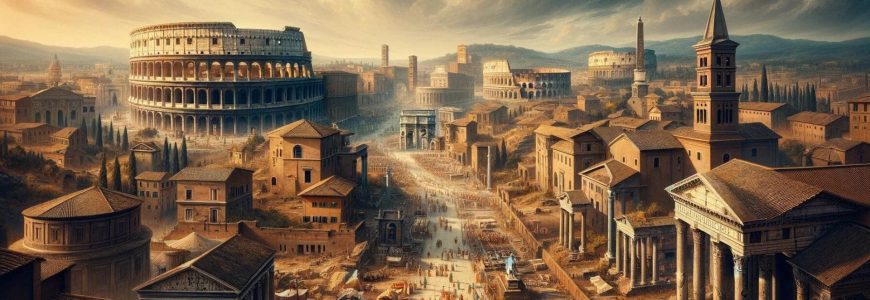
Virgil’s Georgics stands as one of the most influential works in Latin literature, exploring the intersection of labor, morality, and the natural world. Written during a period of political upheaval in late Republican Rome, this didactic poem transcends agricultural instruction, offering profound reflections on ethical responsibility, human endeavor, and the […]
Read more The Ethics of Labor and Human-Nature Relationship in GeorgicsVirgil’s Poetic Craft: Imagery, Allegory, and Symbolism in Eclogues and Georgics

Virgil stands as one of Rome’s most enduring poets, celebrated for the elegance and depth of his literary artistry. His Eclogues and Georgics reveal a sophisticated interplay of imagery, allegory, and symbolism that extends beyond surface storytelling. For students of classical literature, poetry enthusiasts, and cultural historians, exploring these techniques […]
Read more Virgil’s Poetic Craft: Imagery, Allegory, and Symbolism in Eclogues and GeorgicsPastoral Ideals and Political Commentary in Virgil’s Eclogues
Virgil’s Eclogues, composed in the late 1st century BCE, remain a cornerstone of Latin literature, bridging poetry, politics, and philosophy. Far from mere idyllic depictions of rural life, these poems weave together pastoral imagery with subtle commentary on the political and social upheavals of Virgil’s time. For students of classical […]
Read more Pastoral Ideals and Political Commentary in Virgil’s EcloguesLove, Loss, and Nostalgia in Virgil’s Eclogues: Exploring Pastoral Life
Virgil’s Eclogues are often read as gentle poems about shepherds, songs, and rural peace. Yet beneath their seemingly simple pastoral surface lies a complex emotional world shaped by love unfulfilled, loss both personal and political, and a deep nostalgia for a stability that feels already out of reach. For readers […]
Read more Love, Loss, and Nostalgia in Virgil’s Eclogues: Exploring Pastoral LifeWar, Exile, and Heroism in The Aeneid: Virgil’s Epic Vision of Human Struggle
Virgil’s Aeneid is far more than a national epic celebrating Rome’s origins. Written in the aftermath of civil war, it is a meditation on loss, displacement, moral responsibility, and the cost of building a new political order. For modern readers, the poem offers a powerful framework for understanding how war […]
Read more War, Exile, and Heroism in The Aeneid: Virgil’s Epic Vision of Human StruggleAeneas as a Model of Roman Virtue in Virgil’s Aeneid
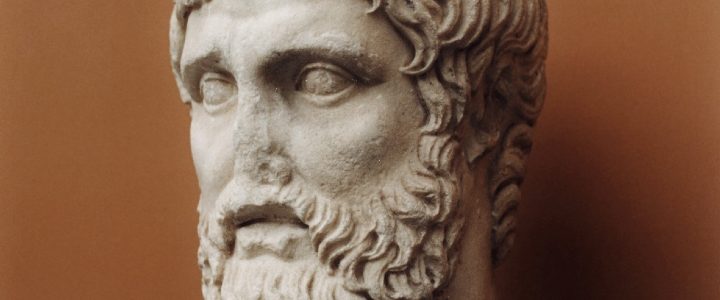
Virgil’s Aeneid presents Aeneas as the quintessential embodiment of Roman virtue, illustrating ideals of duty, piety, and leadership that shaped the moral and cultural identity of ancient Rome. As a Trojan hero destined to found the Roman people, Aeneas exemplifies pietas—devotion to gods, family, and state—demonstrating how individual action intertwines […]
Read more Aeneas as a Model of Roman Virtue in Virgil’s AeneidThe Heroic Journey in Virgil’s Aeneid: Duty, Fate, and Leadership
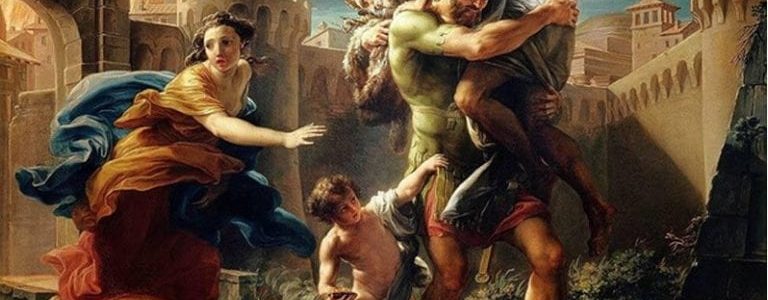
Virgil’s Aeneid, composed in the late first century BCE, is a cornerstone of Roman literature and a defining example of epic storytelling. The poem chronicles the journey of Aeneas, a Trojan hero tasked with founding what will become Rome, navigating a world of divine intervention, personal desire, and political responsibility. […]
Read more The Heroic Journey in Virgil’s Aeneid: Duty, Fate, and LeadershipCritical Essays The Aeneid as a National Epic
During the century prior to Augustus’s rule, the Roman republic was ravaged by a constant series of civil wars, which caused large human and financial losses. Finally, under Augustus, the state was unified once again. With the restoration of peace and order, and with the government taking an active interest […]
Read more Critical Essays The Aeneid as a National EpicCritical Essays Literary Predecessors of the Aeneid
The foremost influence on Virgil was Homer, the Greek poet who composed the Iliad and the Odyssey. By Virgil’s time, Homer was acknowledged as the greatest of all poets, and Virgil studied Homeric epic poetry in order to develop his own artistic techniques. Writing the Aeneid, Virgil consciously competed against […]
Read more Critical Essays Literary Predecessors of the Aeneid