

In William Shakespeare’s works, female characters occupy a distinctive and significant place. They not only participate in the development of the plot but also become vehicles for complex ideas about freedom, power, and personal choice. Despite the constraints of the Renaissance era, in which women were primarily seen as subjects of social control, Shakespeare’s heroines demonstrate a wide range of forms of autonomy—from open resistance to subtle strategies of influence.
The theme of female autonomy in Shakespeare’s plays is important not only for literary analysis but also for understanding the historical context of gender roles. These characters show how individuality and inner freedom can emerge even under restrictive conditions. This essay examines how Shakespeare portrays strong female figures—from Juliet to Rosalind—and what strategies of autonomy they employ.
Historical Context: The Boundaries of Female Freedom in Shakespeare’s Time
To understand the depth of Shakespeare’s heroines, it is essential to consider the social and cultural limitations of the 16th and early 17th centuries. Women in Elizabethan England had no political rights, and their roles were largely confined to family, marriage, and obedience to male authority. The ideal of the “virtuous woman” emphasized modesty, submission, and dependence.
However, literature of the time—especially drama—provided a space for rethinking these norms. The theater functioned as a kind of laboratory for social roles, where alternative forms of behavior could be explored. Notably, female roles were performed by male actors, which further emphasized the constructed nature of gender and reinforced themes of disguise and identity.
Against this backdrop, Shakespeare’s heroines stand out as particularly significant. They do not merely follow established rules but attempt to reinterpret, bypass, or even transform them. Their actions do not always lead to success, but they consistently reveal the contradictions within the system itself.
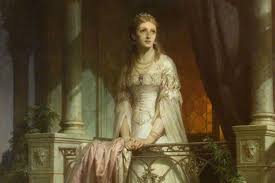 Juliet: Autonomy Through the Choice of Love
In Romeo and Juliet, the character of Juliet offers one of the clearest examples of personal autonomy. Despite her youth and the pressure of her family, she makes independent decisions that shape her fate.
Her refusal to obey her parents’ demand to marry Paris becomes an act of open resistance. Juliet chooses love over social duty, thereby asserting her right to individual choice. Importantly, her decision is not impulsive; it is accompanied by reflection, doubt, and fear.
Juliet also demonstrates strategic thinking. Her agreement to the plan involving a feigned death is not merely an act of desperation but an attempt to take control of a situation in which she has almost no formal power. This illustrates that even within strict limitations, forms of active agency are possible.
Nevertheless, the tragic outcome underscores the limits of her autonomy. Society ultimately proves stronger than individual will, making her character not only heroic but also profoundly tragic.
Portia: Intellect as a Tool of Power
In The Merchant of Venice, Portia represents a different form of female autonomy—intellectual and legal. Unlike Juliet, she does not act against the system but operates within it, using its rules to her advantage.
The courtroom scene is central: disguised as a male lawyer, Portia intervenes in a legal dispute and demonstrates both wit and deep understanding of the law. Her argument is based on precise interpretation, allowing her to alter the course of the case.
Her famous speech on mercy is particularly significant, as it combines legal reasoning with ethical principles. This shows that her authority is grounded not only in intellect but also in moral awareness.
Portia does not dismantle the patriarchal system but temporarily transcends it through disguise. This highlights the dual nature of her autonomy: it is effective in action but limited in social recognition.
Rosalind: Freedom Through the Play of Identity
In As You Like It, Rosalind demonstrates one of the most flexible and complex forms of autonomy. Her decision to disguise herself as a man allows her not only to ensure her safety but also to access freedoms unavailable to women.
In the persona of Ganymede, she becomes an active participant in events, shaping relationships and even guiding other characters in matters of love. Her interactions with Orlando reveal her ability to analyze and direct emotions while maintaining control of the situation.
Importantly, her disguise does not erase her identity but expands it. She integrates multiple roles, enriching her sense of self rather than losing it.
Thus, Rosalind shows that autonomy can be achieved not only through resistance but also through adaptability and creative self-expression.
Lady Macbeth: Power and Its Destructive Cost
In Macbeth, Lady Macbeth represents the most radical form of female autonomy. She seeks power by transgressing both social and moral boundaries.
Her influence over Macbeth is based on psychological manipulation and her ability to exploit his doubts. She consciously rejects traditional feminine qualities associated with compassion and softness, aspiring instead to a form of “masculine” strength.
However, her strategy proves unsustainable. After achieving her goal, she experiences a psychological collapse, ultimately descending into madness. This illustrates that autonomy built on the suppression of emotion and moral principles cannot endure.
Lady Macbeth thus becomes an example of how the pursuit of absolute power can lead to self-destruction.
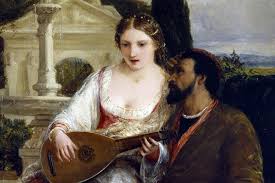 Desdemona: Autonomy as Inner Integrity
In Othello, Desdemona embodies a quieter but equally meaningful form of autonomy. Her independence lies not in the pursuit of power but in her ability to remain true to herself.
Her decision to marry Othello against her father’s wishes is already an act of personal choice. Throughout the play, she remains consistent in her values, even when faced with injustice.
Desdemona does not attempt to change the system, but her behavior exposes its flaws. Her tragedy lies in the fact that her honesty and openness become vulnerabilities in a world dominated by suspicion and manipulation.
Thus, her autonomy manifests as inner strength rather than external action.
Limits and Boundaries of Female Autonomy
Despite the diversity of forms of autonomy, all of Shakespeare’s heroines encounter limitations. These constraints are evident not only in the narratives but also in the structural logic of the plays.
In many cases, their independence is temporary. Disguises are removed, social roles are restored, and deviations from norms are resolved through tragic or ironic endings.
However, these limitations do not diminish the significance of their actions. On the contrary, they intensify the tension between the individual and society, making the conflict more compelling.
Shakespeare does not offer a definitive answer to the question of female freedom. Instead, he presents it as a process rather than a fixed state—a dynamic in which each heroine finds her own path.
Female Autonomy as a Form of Social Analysis
Through his heroines, Shakespeare explores not only individual destinies but also broader social structures. Female autonomy becomes a lens through which issues of power, morality, and identity are examined.
Each heroine interacts with the system differently: some resist it, others adapt to it, and still others attempt to manipulate it. Together, these strategies create a complex picture in which there is no single correct approach.
This complexity contributes to the enduring relevance of Shakespeare’s plays. They do not provide clear answers but encourage reflection on the limits of freedom and the possibilities of individual agency.
Key Takeaways
- Shakespeare’s female characters display diverse forms of autonomy, from open defiance to subtle influence.
- Their independence always exists within the constraints of their historical and social context.
- Different heroines employ different strategies: love, intellect, disguise, and moral integrity.
- Female autonomy serves as a means of analyzing society and its contradictions.
Conclusion
Shakespeare’s female characters reveal a complex interaction between freedom and limitation. Through various types of heroines, he demonstrates that autonomy is possible, but it always requires strategy, effort, and sometimes sacrifice.
These characters remain relevant because they reflect a universal conflict between personal choice and social constraints.