
Virgil’s Aeneid, composed in the late first century BCE, is a cornerstone of Roman literature and a defining example of epic storytelling. The poem chronicles the journey of Aeneas, a Trojan hero tasked with founding what will become Rome, navigating a world of divine intervention, personal desire, and political responsibility. The Aeneid explores timeless themes of duty, fate, and leadership, offering insights into the moral and ethical obligations of those destined to lead. Understanding Aeneas’s heroic journey illuminates broader cultural values in Roman society, as well as enduring questions about human responsibility, resilience, and moral decision-making. This analysis is valuable for students of literature, history, and leadership studies, as it connects ancient narrative structures with enduring human concerns.
Contextual Framework: Rome, Epic Tradition, and Virgil’s Vision
The Aeneid was written during the transition from the Roman Republic to the Principate under Augustus, reflecting the ideological and political climate of early imperial Rome. Virgil, drawing on Homeric models, adapts the epic form to celebrate Roman ideals and to articulate the moral imperatives of leadership and civic duty.
Epic Tradition and Literary Inheritance
Virgil’s work is deeply indebted to Homer’s Iliad and Odyssey, inheriting narrative techniques, heroic archetypes, and thematic concerns. However, whereas Homer emphasizes personal glory and the vicissitudes of war, Virgil integrates the concept of duty (pietas)—toward gods, family, and state—as central to heroic identity. This adaptation reflects Roman cultural priorities, emphasizing moral responsibility, obedience to fate, and the social function of leadership.
Political and Cultural Significance
By portraying Aeneas as the progenitor of Rome, Virgil links mythic narrative to the ideological project of Augustan Rome. The epic functions as both a literary masterpiece and a moral allegory, reinforcing cultural ideals such as civic duty, sacrifice, and the subordination of personal desire to collective destiny. Readers gain insight into Roman conceptions of heroism, ethics, and historical purpose, as well as the ways literature can serve as a vehicle for political and moral instruction.
Duty (Pietas): The Moral Imperative of the Hero
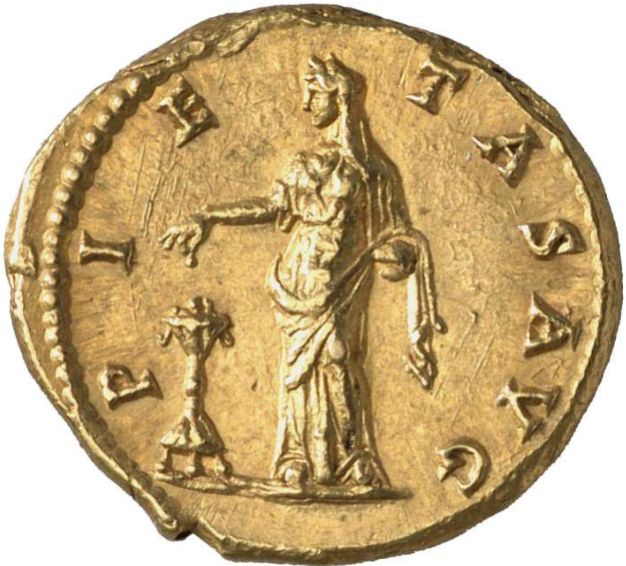
Aeneas’s heroism is defined by pietas, a central virtue in Roman culture encompassing duty to the gods, family, and country. This moral framework differentiates him from Homeric heroes, whose actions are often driven by personal honor and martial prowess.
Duty to the Divine
From the outset, Aeneas is bound by divine mandate. The gods, particularly Jupiter and Venus, shape his journey, directing him toward the ultimate goal of founding Rome. Aeneas’s obedience to divine will reflects the Roman ideal that moral heroism requires alignment with higher cosmic and civic principles. His encounters with obstacles, such as the storm sent by Juno or the trials in Carthage, test his commitment to duty over immediate gratification, emphasizing that true heroism requires subordination of personal desire to moral and divine imperatives.
Familial Responsibility
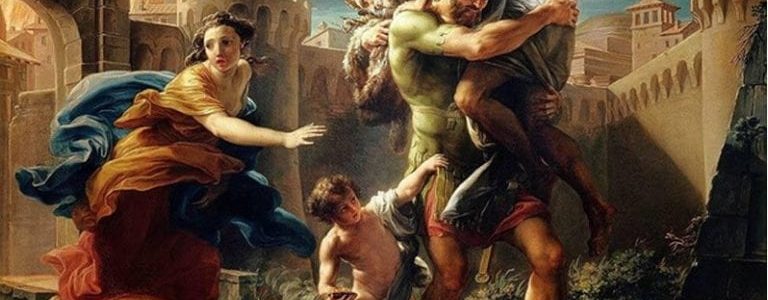
Aeneas’s sense of duty extends to family, exemplified by his protection of his father Anchises and the evacuation of his household from Troy. The symbolic carrying of Anchises embodies the intertwining of personal loyalty with historical continuity, representing the transmission of cultural and familial legacy. Aeneas’s actions demonstrate that leadership and heroism are inseparable from moral obligations to kin and the preservation of tradition.
Civic Duty and Founding Rome
Aeneas’s ultimate responsibility lies in the establishment of Rome. His personal sacrifices—most notably the abandonment of Dido, the Queen of Carthage—illustrate the ethical tension between individual desire and civic duty. Virgil portrays leadership as inherently demanding, requiring the prioritization of communal welfare over personal fulfillment. Aeneas’s unwavering commitment to this goal reinforces the Roman ideal that virtue is measured by one’s service to state and destiny.
Fate (Fatum) and the Heroic Journey
Fate governs the trajectory of Aeneas’s journey, shaping both narrative structure and moral expectations. The interplay between fate and free will underscores the epic’s philosophical depth, exploring how humans navigate predetermined outcomes while exercising agency within them.
Predestination and Ethical Agency
Aeneas’s destiny is divinely ordained: he is fated to found the Roman people. Yet, Virgil emphasizes that fate does not absolve moral responsibility. Each choice, each act of courage, reflects the hero’s ethical engagement within the bounds of predestination. This tension between fate and agency invites reflection on the interplay of external forces and individual responsibility—a theme with enduring relevance in discussions of leadership and ethics.
Trials and Moral Growth
Fate manifests not as a linear path but as a series of trials designed to test Aeneas’s character. From battles with the Latins to the moral quandaries of Carthage, each episode challenges his capacity for restraint, judgment, and self-sacrifice. Virgil presents these trials as mechanisms for moral and ethical development, demonstrating that heroism is both a response to destiny and a product of disciplined character.
Divine Mediation and Human Choice
The gods’ interventions highlight the tension between external guidance and internal deliberation. While divine influence propels the narrative, Aeneas’s decisions reveal the human dimension of moral judgment. Virgil portrays heroism as an active negotiation between divine will and ethical discernment, underscoring the complexity of leadership under the constraints of fate.
Leadership and Ethical Responsibility
Leadership is a central theme of the Aeneid, portrayed as an ethical vocation rather than a mere exercise of power. Aeneas embodies a model of principled leadership, emphasizing foresight, self-discipline, and moral courage.
Balancing Personal Desire and Public Duty
Aeneas’s encounters, particularly with Dido, illustrate the ethical challenges inherent in leadership. His choice to leave Carthage, though personally devastating, reinforces the primacy of duty over desire. Virgil emphasizes that leadership requires difficult decisions, often involving personal sacrifice to achieve collective goals. Aeneas’s struggles provide a framework for understanding the moral dimensions of decision-making in positions of authority.
Conflict Resolution and Strategic Prudence
Aeneas demonstrates not only moral integrity but also strategic insight, balancing military prowess with diplomacy. His ability to unite disparate groups and navigate complex social and political dynamics highlights the multifaceted nature of leadership. Virgil portrays effective leaders as both morally guided and pragmatically skilled, capable of integrating ethical principles with practical exigencies.
The Hero as Civic Model
Beyond his personal journey, Aeneas serves as a civic exemplar. His adherence to duty, subordination of personal desire, and commitment to Rome’s foundation offer a moral template for citizens and rulers alike. Leadership, in this context, is inseparable from virtue, responsibility, and ethical vision—a principle that resonated in Augustan Rome and continues to inform contemporary notions of governance and heroism.
The Epic Structure and Moral Architecture
Virgil’s structural choices enhance the thematic focus on duty, fate, and leadership. The poem’s bifurcated narrative—mirroring Homer’s epic models—allows for exploration of both external conflicts and internal moral deliberation.
The Journey as Ethical Framework
The episodic journey from Troy to Italy functions as a moral and psychological odyssey. Each adventure tests Aeneas’s adherence to duty, resilience in adversity, and judgment under pressure. The structure reinforces the idea that heroism is cumulative, emerging from sustained ethical engagement rather than isolated acts of bravery.
Interweaving History, Myth, and Ethics
Virgil integrates mythic and historical elements to construct a moral universe where human action and destiny intersect. The Aeneid situates ethical development within a broader narrative of historical continuity, linking individual virtue to the foundation and prosperity of the Roman state. This synthesis of myth, history, and morality elevates the epic from storytelling to ethical allegory.
Comparative Analysis: Aeneas and Other Epic Heroes
Comparing Aeneas to Homeric heroes such as Achilles and Odysseus illuminates his distinctive moral orientation. While Achilles pursues personal honor and Odysseus relies on cunning and adaptability, Aeneas exemplifies selflessness, ethical deliberation, and devotion to duty. Virgil transforms the epic hero from a figure of martial excellence into a model of principled leadership, reflecting Roman values and Augustan ideology.
Ethical Dimensions versus Heroic Glory
Homeric heroes often equate heroism with glory and reputation, whereas Aeneas’s heroism is measured by ethical conduct, adherence to destiny, and service to the community. This contrast underscores the Roman emphasis on civic virtue and moral responsibility, positioning Aeneas as both a literary and cultural exemplar.
Leadership Lessons for Modern Audiences
The Aeneid offers enduring insights into leadership ethics. Aeneas’s balancing of personal desire, civic responsibility, and moral judgment provides a template for contemporary discussions of ethical decision-making, resilience, and strategic foresight. His journey demonstrates that true heroism transcends personal achievement, integrating moral vision with practical action.
Modern Relevance: Duty, Fate, and Ethical Leadership
The themes of the Aeneid continue to resonate in modern contexts. Questions of duty, ethical decision-making, and leadership under uncertainty remain central to political, organizational, and personal life. Aeneas’s journey highlights the enduring relevance of principled action, moral deliberation, and strategic foresight, offering lessons for navigating complex ethical and social challenges.
Virgil’s integration of narrative artistry and moral inquiry exemplifies how literature can shape cultural understanding, inform civic ideals, and inspire reflection on the nature of heroism. The Aeneid reminds contemporary readers that leadership is inseparable from ethical responsibility, and that duty and fate, while constraining, can also illuminate the path toward principled action.
Key Takeaways
-
Aeneas’s heroism is defined by pietas: duty to gods, family, and state.
-
Fate (fatum) shapes the journey but does not eliminate ethical responsibility.
-
Leadership requires balancing personal desire with civic and moral obligations.
-
Trials and challenges serve as mechanisms for moral and ethical development.
-
Aeneas differs from Homeric heroes by prioritizing virtue over personal glory.
-
The epic structure reinforces ethical themes through narrative and episodic development.
-
Virgil integrates myth, history, and morality to construct a cohesive moral universe.
-
The Aeneid offers enduring lessons on leadership, resilience, and principled action.
Conclusion
Virgil’s Aeneid exemplifies the heroic journey as an ethical and moral odyssey, where duty, fate, and leadership intersect. Aeneas’s path from Troy to the foundations of Rome illustrates the demands of principled heroism, emphasizing the subordination of personal desire to collective responsibility and divine mandate. The epic remains a vital resource for understanding Roman values, ethical leadership, and the enduring human quest to navigate duty and destiny with integrity and courage.