
Virgil’s Aeneid presents Aeneas as the quintessential embodiment of Roman virtue, illustrating ideals of duty, piety, and leadership that shaped the moral and cultural identity of ancient Rome. As a Trojan hero destined to found the Roman people, Aeneas exemplifies pietas—devotion to gods, family, and state—demonstrating how individual action intertwines with collective destiny. Exploring Aeneas’s character offers readers insights into Roman ethical frameworks, leadership principles, and the societal expectations of heroism. This article is valuable for literature enthusiasts, students of classical studies, and anyone interested in the intersection of morality, leadership, and cultural identity.
Historical and Cultural Context of Roman Virtue
Understanding Aeneas as a model of virtue requires situating the Aeneid within its historical and cultural milieu. Composed during the Augustan period, the epic both celebrates Rome’s origins and communicates moral exemplars to its citizens.
Augustan Ideology and Moral Instruction
Virgil wrote during a period of political consolidation under Augustus, when Rome transitioned from Republic to Empire. The emperor’s vision emphasized social stability, civic duty, and moral restoration, which the Aeneid reinforces through narrative and characterization. Aeneas’s devotion to duty, sacrifice, and destiny mirrors the ideals promoted by Augustan ideology, offering readers a literary framework to understand ethical leadership and communal responsibility.
Epic as Cultural Codification
The Aeneid inherits the Homeric epic tradition but adapts it to reflect Roman priorities. Unlike Homeric heroes, whose pursuits often center on personal honor and martial glory, Aeneas’s heroism foregrounds civic virtue, ethical decision-making, and alignment with destiny. Virgil codifies Roman cultural values through narrative, transforming mythic storytelling into a moral and civic guide for readers.
Pietas: Duty to Gods, Family, and State
Aeneas’s defining quality is pietas, which structures both his actions and his moral character. Virgil portrays this virtue as the foundation of leadership and heroism in Roman society.
Duty to the Divine
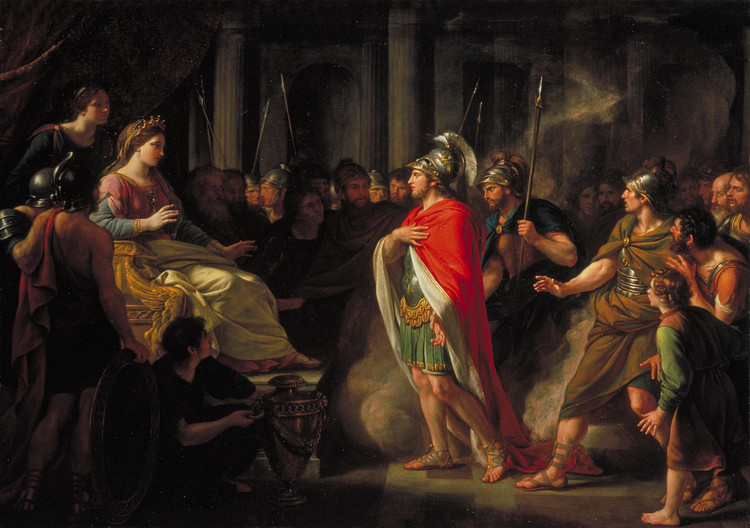
Throughout the Aeneid, Aeneas is guided by the will of the gods. His obedience to Jupiter’s decrees and the counsel of Venus reflects the Roman understanding of human duty as inseparable from divine order. For example, his acceptance of leaving Dido, though emotionally wrenching, demonstrates that piety entails subordinating personal desire to divine and moral obligation. Through this lens, Aeneas models ethical conduct under the pressure of external authority.
Familial Responsibility
Aeneas’s devotion extends to his family, particularly in his protection of Anchises and Ascanius during the fall of Troy. The act of carrying Anchises from the burning city symbolizes the intertwining of filial duty and historical continuity, emphasizing that moral virtue encompasses care for the past and commitment to future generations. In Roman culture, such acts underscore the ethical imperative to preserve lineage and honor family obligations.
Civic and Political Duty
Central to Aeneas’s identity is his responsibility to found the Roman people. His ethical decisions, including strategic military actions and personal sacrifices, prioritize the welfare of the collective over individual gratification. Virgil portrays civic duty as the pinnacle of Roman virtue, demonstrating that leadership requires moral fortitude and a commitment to communal destiny.
Sacrifice and Moral Resilience
Aeneas’s journey is marked by repeated trials that demand moral resilience, illustrating the ethical dimensions of Roman heroism.
Personal Sacrifice
One of the most striking examples of Aeneas’s virtue is his abandonment of Dido, the queen of Carthage. Despite profound emotional bonds, he prioritizes duty over personal desire, exemplifying the Roman ideal that ethical responsibility transcends individual longing. This episode highlights the moral rigor expected of leaders and the ethical tension between personal happiness and collective welfare.
Endurance in Adversity
Aeneas faces numerous obstacles, including wars, natural disasters, and divine opposition. His consistent adherence to virtue under pressure illustrates resilience as an essential component of Roman heroism. Virgil conveys that moral excellence requires steadfastness, courage, and the capacity to endure hardship without compromising ethical principles.
Leadership as Ethical Exemplarity
Aeneas is not merely a warrior; he is a leader whose authority is grounded in moral integrity and strategic judgment. His leadership reflects the Roman conception of a virtuous ruler as one who balances ethical deliberation with practical responsibility.
Ethical Decision-Making
Leadership in the Aeneid involves making choices that harmonize personal ethics with communal needs. Aeneas’s careful consideration of military and political strategy, coupled with adherence to divine guidance, positions him as a model for ethical leadership. His ability to prioritize the common good over self-interest demonstrates that true authority derives from virtue rather than coercion.
Diplomacy and Moral Prudence
Aeneas’s engagements with foreign leaders, from Dido to Latinus, require negotiation, foresight, and ethical discernment. Virgil emphasizes that leadership demands moral and practical intelligence, underscoring the interconnectedness of virtue, strategy, and civic responsibility. Aeneas exemplifies the ideal of a ruler who integrates ethical awareness with pragmatic action.
Leadership as Civic Inspiration
Beyond strategic competence, Aeneas inspires others through moral example. His piety, courage, and commitment to destiny provide a template for citizens and soldiers, reinforcing the idea that ethical conduct legitimizes authority. In this way, Aeneas embodies the Roman notion that leadership is inseparable from virtue.
Fate and Moral Responsibility
The Aeneid emphasizes the interplay between fate (fatum) and ethical agency, highlighting how predetermined outcomes intersect with human responsibility.
Navigating Destiny
Aeneas’s trajectory is guided by divine decree, yet Virgil emphasizes that moral choice remains essential within the constraints of fate. Aeneas’s deliberate and principled actions—whether in war, negotiation, or personal sacrifice—demonstrate that virtue requires active engagement, even under predetermined circumstances.
Ethical Trials as Character Formation
Fate shapes the journey but does not eliminate the moral challenges that define heroism. Each trial functions as a test of ethical integrity, reinforcing the Roman ideal that virtue emerges through conscious effort, resilience, and adherence to duty in the face of adversity.
Comparative Perspectives: Aeneas and Homeric Heroes
Aeneas’s virtues can be better understood by comparing him to Greek epic heroes, particularly Achilles and Odysseus.
Selflessness versus Glory
Unlike Achilles, whose heroism often centers on personal honor and martial excellence, Aeneas prioritizes communal welfare and ethical responsibility. His heroism is defined less by glory in battle than by devotion to duty and moral integrity.
Strategic Prudence versus Cunning
While Odysseus relies on cunning and adaptability, Aeneas’s heroism integrates strategic intelligence with ethical discernment. Virgil emphasizes that effective leadership balances pragmatic judgment with moral principles, reinforcing Roman ideals of civic virtue and ethical governance.
Moral Lessons and Enduring Relevance
Aeneas’s embodiment of Roman virtue offers lessons that extend beyond the historical context of the Aeneid. His journey illustrates principles of ethical leadership, moral resilience, and the subordination of personal desire to collective responsibility.
Lessons for Leadership
Modern readers can draw insights from Aeneas’s balance of ethics, strategy, and personal sacrifice. His example demonstrates that principled leadership requires courage, foresight, and a commitment to higher ideals, applicable in both organizational and societal contexts.
Ethical Navigation of Personal and Collective Goals
Aeneas models how individuals can navigate tensions between personal fulfillment and communal obligation. His decisions underscore the moral significance of prioritizing long-term ethical objectives over immediate gratification, offering guidance for ethical decision-making across contexts.
Key Takeaways
- Aeneas exemplifies pietas, embodying devotion to gods, family, and state.
- Roman virtue is inseparable from ethical leadership, moral resilience, and civic responsibility.
- Fate guides Aeneas’s journey but requires active engagement and principled action.
- Personal sacrifice underscores the ethical demands of heroism.
- Leadership integrates ethical discernment, strategic intelligence, and moral example.
- Aeneas contrasts with Homeric heroes by prioritizing duty over personal glory.
- Ethical challenges and trials reinforce the development of character and virtue.
- The Aeneid provides enduring lessons on moral integrity, civic duty, and principled leadership.
Conclusion
Virgil’s Aeneid portrays Aeneas as a paragon of Roman virtue, demonstrating that heroism is inseparable from ethical conduct, duty, and civic responsibility. Through his devotion to gods, family, and state, Aeneas exemplifies the moral and civic ideals that shaped Roman identity and cultural legacy. His journey illustrates that leadership, heroism, and moral integrity require constant negotiation of personal desire, ethical principles, and collective responsibility—lessons that remain relevant to contemporary readers seeking to understand the enduring significance of virtue, duty, and principled action.